
آداب و رسوم عید نوروز به زبان انگلیسی
برنامهریزی تعطیلات نوروز
تمرین و مطالعهی مکالمههای واقعی به شما کمک میکند سطح زبان انگلیسی خود را در تعطیلات نوروز تقویت کنید. در ادامه یک نمونه مکالمه بین دو نفر آورده شده است:
Bill: Hi Amy. It’s Bill.
Amy: Hi Bill. How are you doing?
Bill: Not bad. I’m calling to talk about the New Year. Have you got any plans yet?
Amy: No, not yet. What did you have in mind?
Bill: How about going to a hockey game on Saturday night?
Amy: I don’t really feel like a hockey game. I did that last weekend.
Bill: Well then, what about going out for dinner?
Amy: I’d rather go to a movie.
Bill: Okay. That sounds good. Do you want me to pick you up?
Amy: No. That’s okay. I can meet you at the theater.
Bill: Okay. Let’s talk on Saturday morning and arrange the time.
Amy: Great. I’ll talk to you then. Bye.
Bill: Bye.
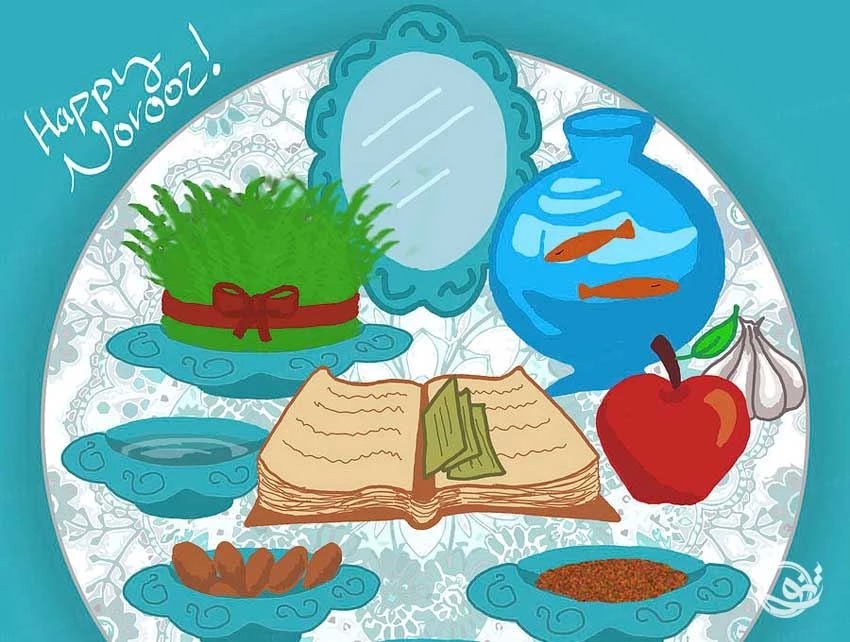
Haft Seen Table
Iranians set up a special table called the Haft Seen, which includes seven symbolic items starting with the Persian letter “Seen”. Each item represents concepts such as prosperity, freshness, rebirth, love, and life, celebrating the new beginnings of spring.
One of the most important items is wheatgrass (Sabzeh), which is grown from grains a few days before the new year and later thrown into water on the 13th day of Nowruz to mark the end of the celebrations.
Summary
Nowruz is a time for visiting friends and family, enjoying sweets and tea, wearing new clothes, and celebrating renewal and life. These customs help bring people together and make the beginning of spring a joyful and meaningful occasion.
Iranian Customs: Nowruz Celebration
As you know, we are currently in the middle of the 13-day celebration known as Nowruz. This celebration begins the moment the Earth crosses the vernal equinox and continues until Wednesday, April 1st.
Here are some important customs and traditions that Iranians follow during Nowruz:
Deed o Bāz Deed — “See and See Again”
During the 13 days of spring, it is customary to visit all your friends and family, and they, in turn, visit you. Everyone acts as a gracious host, offering sweets, tea, and fruit. Typically, visits start with the elders of the family, followed by close relatives, friends, and even acquaintances.
Wearing New Clothes
Iranians often wear at least one new set of clothing during Nowruz, including underwear. Spring symbolizes freshness and renewal, so wearing new clothes represents letting go of the old and welcoming the new.